
Last updated November 15, 2026
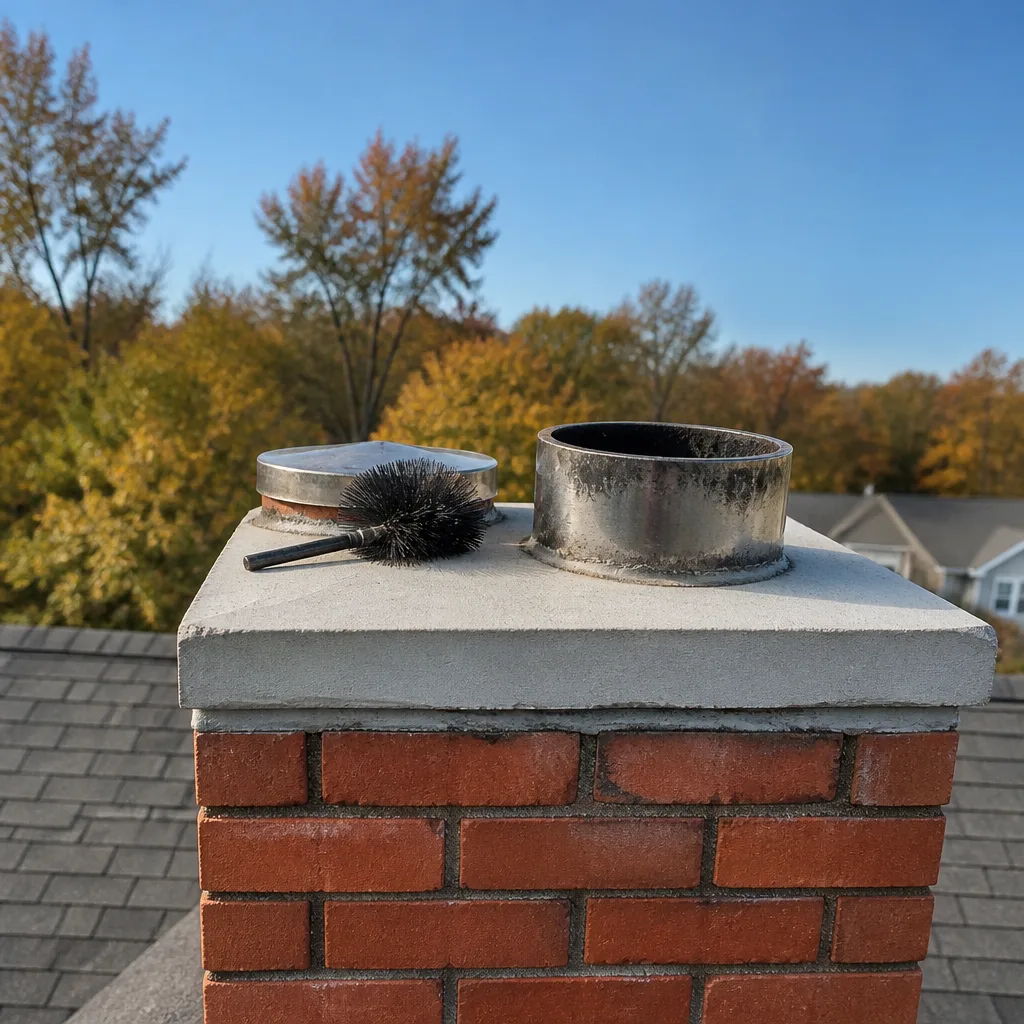 Sweep & inspection
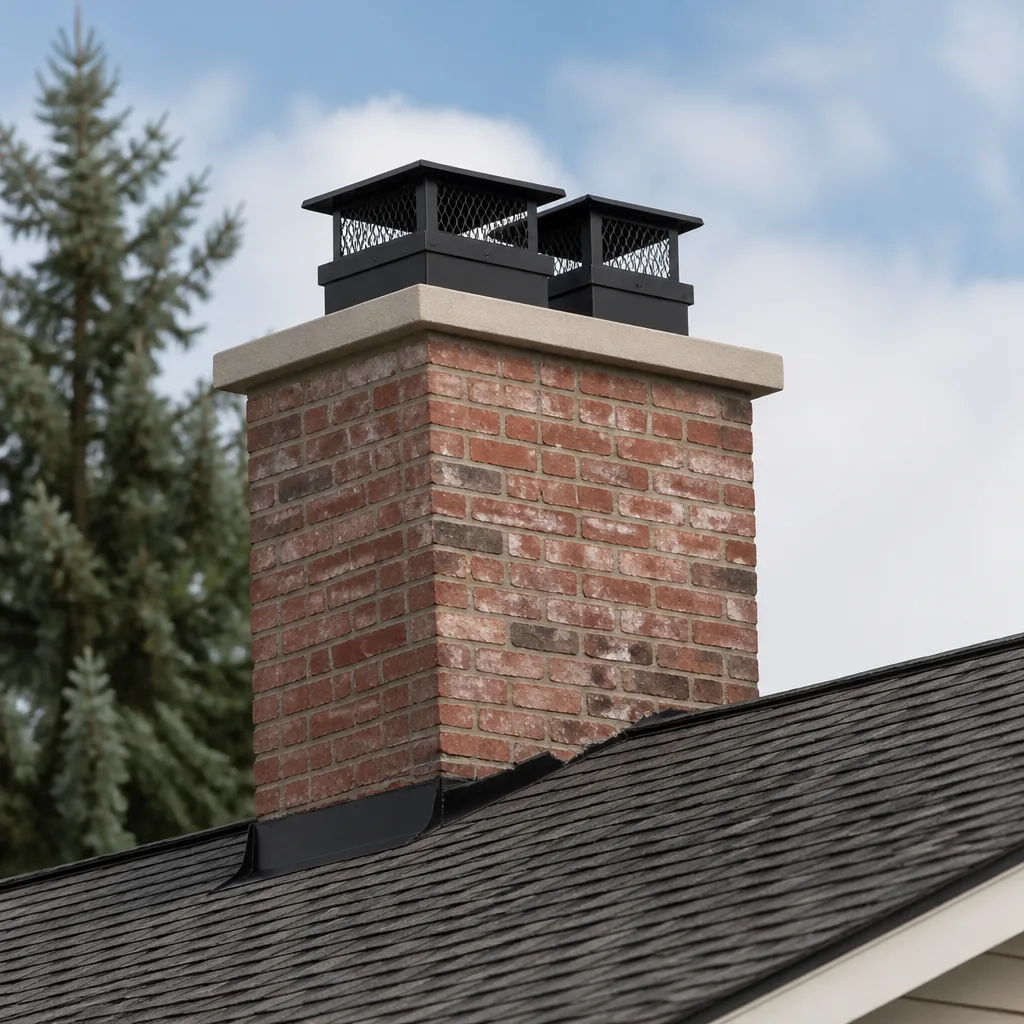 Caps & crowns
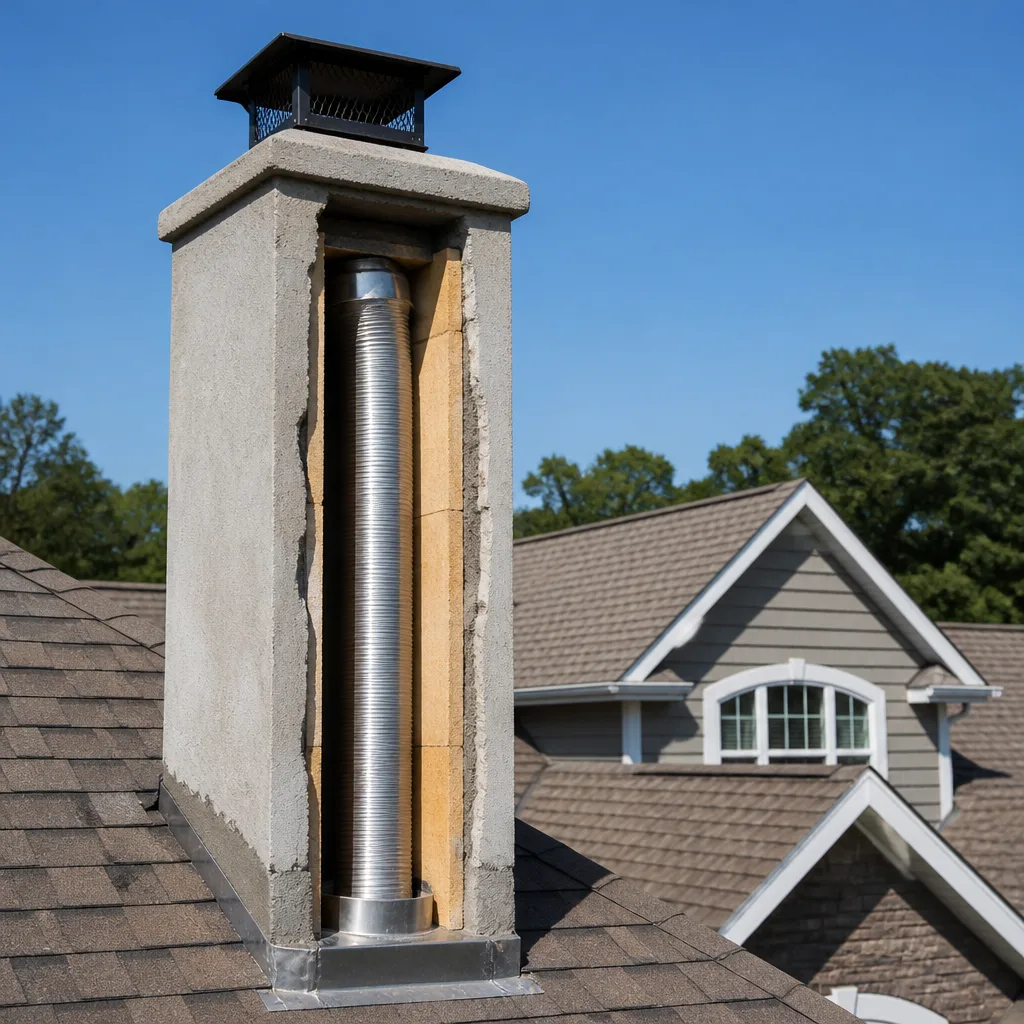 Flue relining
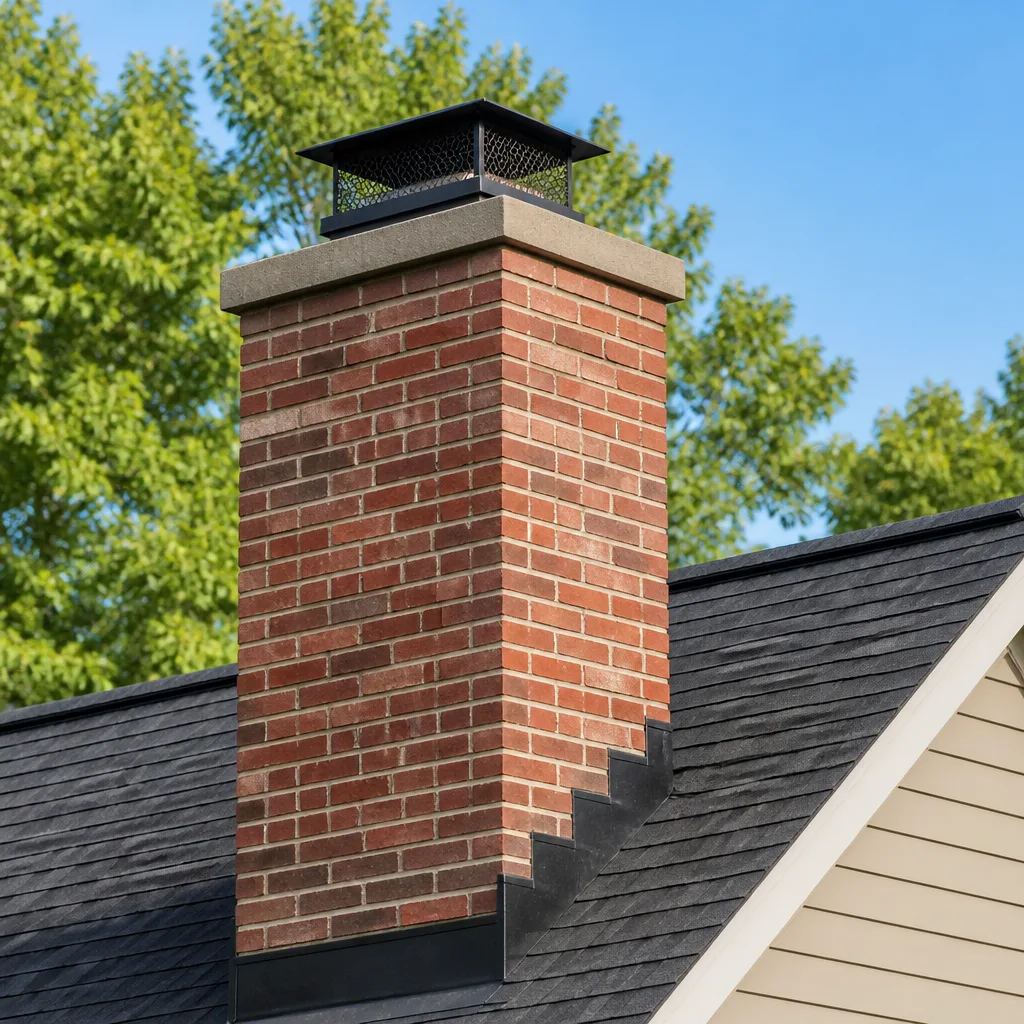 Masonry repair
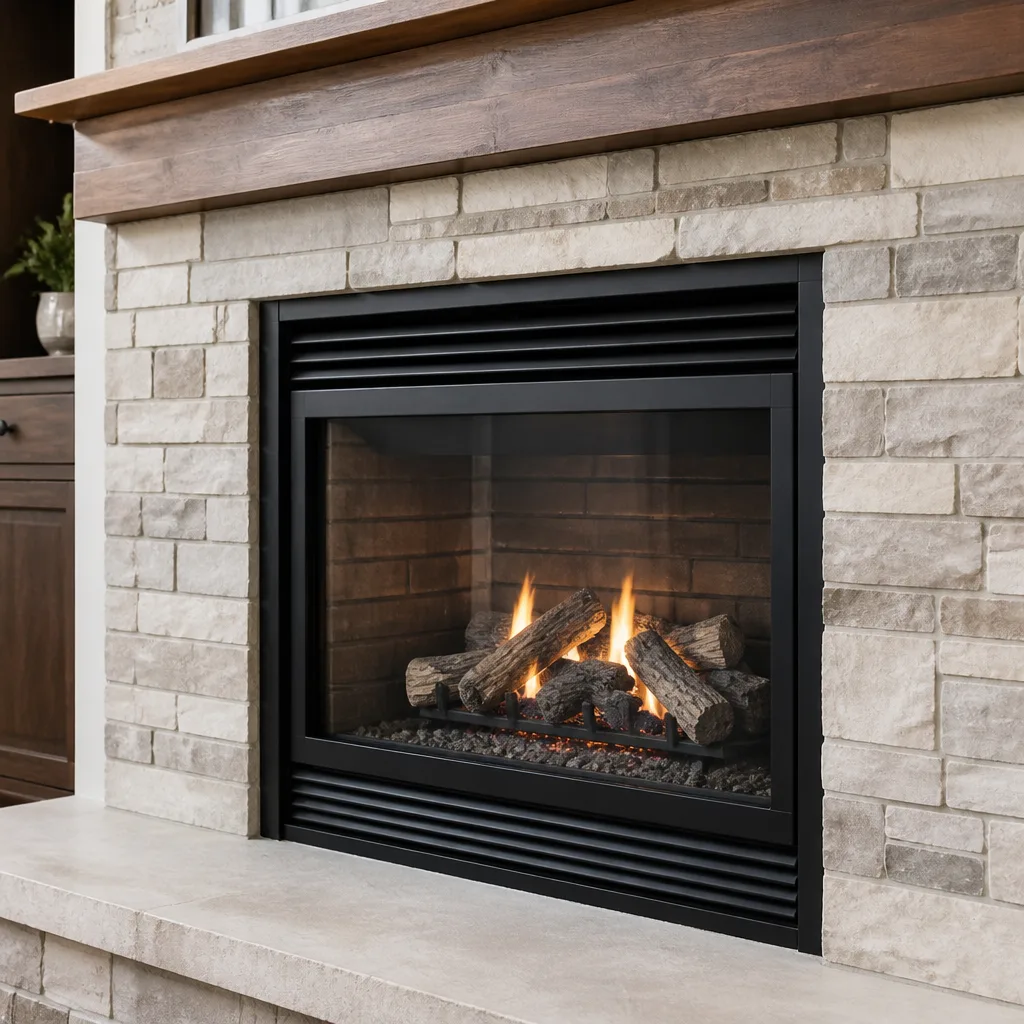 Gas fireplace service
Level 1 sweep and inspection to the NFPA 211 annual standard - flue, crown, cap, and flashing checked and photographed
Chimney sweep logs do not sweep chimneys. They loosen some creosote - which then falls where a brush and vacuum still have to collect it.
Chimney Sweep Troubleshooting in Pearland: Common Problems and How to Fix Them
A smoky fireplace in Pearland is rarely a draft problem. It looks like one, and it gets treated like one, but in our experience it’s usually a moisture problem wearing a draft problem’s clothes. The Gulf Coast air holds water most of the year, and a chimney in Pearland sits in that air whether it’s been used since last winter or not. Homeowners chase the wrong fix, pay for a draft remedy, and end up back where they started. This guide walks through what actually goes wrong with chimneys here, how to read your own symptoms before you call anyone, and how to describe a problem so a technician quotes the right service the first time.
Quick Answer
Chimney problems in Pearland most often trace to humidity-soaked masonry and glazed creosote from light, seasonal burning, not to structural failure. Start by matching your symptom (smoke rollback, odor, visible cracking, or weak draft) to its likely cause before you call, and let a camera inspection confirm it. Most issues are fixable with a sweep, a liner restoration, or a repair rather than a full rebuild.
Styles & brands we work with
- Sweep & inspection
- Caps & crowns
- Flue relining
- Masonry repair
- Gas fireplace service
Table of Contents
- Why Pearland Humidity Changes How a Chimney Fails
- The Symptom-to-Cause Decision Tree
- How Seasonal Use Creates Its Own Blockage Patterns
- What You Can Check With a Flashlight vs. What Needs a Camera
- Glazed Creosote, Spalling Masonry, and What Each One Means
- How to Describe Your Symptoms So the First Call Gets It Right
- Sweep, Restoration, or Reline? Matching the Fix to the Finding
- Troubleshooting a Chimney Before a Sale or After a Purchase
Why Pearland Humidity Changes How a Chimney Fails
Most chimney guidance is written for places with sharp, dry winters. Pearland doesn’t have those. What it has is warm, humid air for most of the year and a short stretch of genuinely cold nights in winter. That combination changes the failure sequence. Up north, a chimney spends months hot and dry, then freezes hard. Here, a chimney spends most of the year drawing damp air through a cold flue, then gets fired up for a handful of cold evenings and shuts back down.
That cycle matters. Masonry is porous. When a chimney runs cold and damp for months, the brick and mortar absorb moisture from the surrounding air. A fire then drives that moisture outward as steam, and the surface of the masonry begins to spall, flaking and pitting as it dries from the inside out. Homeowners see the flaking on the crown or the top courses and assume the chimney is crumbling structurally. Often it’s moisture movement, not structural collapse, and the fix is different.
The same humidity affects creosote. Creosote forms in stages, from light soot to a sticky film to a hardened glaze. In a dry climate, that progression takes steady burning. Here, the in-between stage, the sticky middle layer, lingers longer because the flue stays relatively cool and damp between fires. That sticky layer is the perfect base for glaze when the fire does run hot. Once creosote glazes, sweeping alone won’t lift it, and that’s where restoration capabilities like HeatShield come into play rather than a standard brush-and-vacuum.
If you’ve noticed your firebox or damper rusting, or a musty smell that gets stronger after a rainy stretch, you’re seeing this pattern. It’s one of the most common things our technicians find across the Pearland area, and it’s why we lead with inspection before recommending anything.
The Symptom-to-Cause Decision Tree
Before you call, figure out which symptom you actually have. A chimney can present several problems at once, but they usually fall into four buckets, and each one points to a different service. Reading your symptom correctly is the difference between a sweep and an unnecessary rebuild.
- Smoke rollback. Smoke puffs into the room instead of going up. Common causes: a cold flue (normal at startup until the flue warms), a closed or partly closed damper, a blocked or bird-nested flue cap, or a house that’s running negative pressure from bath fans and kitchen exhaust. If smoke rolls back only on the first few minutes of a fire, it’s usually cold-flue behavior, not a defect. If it rolls back every time a specific exhaust fan runs, it’s pressure, not the chimney.
- Odor, especially when the chimney is not in use. A musty, smoky, or sulfurous smell that gets worse in humid weather or after rain points to moisture in the masonry or a buildup of creosote and soot in the smoke chamber. This is a humidity signature, and it’s distinct from the sharp creosote smell you get right after a fire.
- Visible cracking. Look at the crown, the mortar joints, and the exterior stack. Hairline cracks in the crown are common and repair-able; large cracks or loose bricks are more serious. Cracking inside the flue itself is a different story and usually needs a camera to see.
- Draft failure. The fire just won’t catch or burns sluggishly, and smoke pours back. Causes include a flue that’s too short, a flue that’s too large relative to the firebox, an obstruction, or a cracked flue tile letting air in where it shouldn’t. Draft failure from an obstruction is often a seasonal-use problem (see below).
Pick the bucket that matches your symptom, write it down in plain terms, and you’ll already have given a technician more to work with than most callers. If your symptom is smoke rollback plus odor, say both: it tells us moisture and airflow are both involved, which points toward a different inspection path than smoke rollback alone.
How Seasonal Use Creates Its Own Blockage Patterns
A fireplace that runs every day in winter and sits cold the rest of the year fails differently from one that gets steady year-round use. In Pearland, most fireplaces are seasonal. That means most chimneys here spend months as a cold, still, humid column of air with a cap on top. That’s a perfect place for things to accumulate.
Year-round wood burners build creosote continuously, so it’s layered and relatively predictable. Seasonal fireplaces tend to collect a lighter but broader load: dust, soot flakes from the last few fires, nesting material from birds and wasps that find the cap area attractive during the warm months, and leaf debris blown onto the cap screen. When the first cold night comes, that whole load is sitting there and the fire has to fight through it. A homeowner reads the weak draft as a chimney problem and treats the wrong cause.
The other seasonal pattern is a cracked or missing cap. Caps are the roof’s first line of defense against rain and critters. When a cap cracks or a screen tears, moisture gets straight into the top of the flue, and that moisture runs down into the smoke chamber. It creates the musty odor and the rusted damper described above, and it looks exactly like a “humidity” problem even though the real entry point is the cap. In our experience, a lot of the odor calls we see in Pearland come down to a failing cap letting water in.
Two practical things follow. First, a chimney that sits unused still needs an annual look, because time and humidity do their work whether or not there’s a fire. Second, if you only burn a few nights a winter, don’t assume you’re exempt from buildup. The pattern is different, not absent.
What You Can Check With a Flashlight vs. What Needs a Camera
Some of the assessment is yours to do safely. Some of it isn’t, and knowing the line protects both your time and your safety. Here’s the split we’ve found most useful to explain.
Safe to check yourself, with a flashlight and no ladder work:
- The firebox: look for cracked firebrick, crumbling mortar, or gaps at the edges. These are visible and worth reporting.
- The damper: open and close it by hand and confirm it moves freely and seats fully. A damper that sticks open wastes heat and lets air in.
- The smoke chamber, from below: shine a light up past the damper. You can see buildup and flame-staining without climbing.
- The exterior stack, from the ground with binoculars: check the cap for cracks or missing screen, the crown for visible gaps, and the upper courses for loose bricks or flaking.
- Odor and draft behavior: note when they happen, with conditions (raining, cold, exhaust fans running). This is observation, not diagnosis, and it’s the most useful data you can bring to a call.
Not safe to check yourself:
- The inside of the flue beyond what you can see straight up. This needs a camera run down the full length.
- Roof-level work of any kind, including stepping onto the roof or reaching the crown. Height work is where serious injuries happen.
- Anything involving the electrical components of a gas appliance or a fireplace insert’s wiring. Leave that to a trained professional.
- Attempting to sweep or clear a blockage from inside the firebox. Dislodging a debris nest without knowing what’s above it can drop material into the smoke chamber.
The line is simple: you can inspect the parts that are safely visible from the hearth and the ground, and everything beyond that waits for a proper chimney sweep and camera inspection. We say this not to inflate the service, but because a homeowner with a flashlight can confirm a symptom without risking a fall to diagnose it.
Glazed Creosote, Spalling Masonry, and What Each One Means
Two findings change the whole conversation about a chimney, and homeowners often conflate them. Glazed creosote is a fire-risk problem. Spalling masonry is a moisture-and-structure problem. They look different and they get fixed differently.
Glazed creosote is a hardened, glassy or tar-like coating inside the flue. It starts as flaky soot, builds into a sticky film, and hardens under heat. Once it’s glaze, a standard sweep won’t remove it, and it’s a genuine chimney fire risk because it’s concentrated fuel sitting on the flue wall. Restoration products are designed for this; HeatShield’s liner systems and similar professional treatments work on the flue surface to address both glazed creosote and the cracked tiles that let air in. This is one of the reasons we work with professional-grade restoration capabilities instead of generic brushes, because glaze is beyond what a plain sweep can promise.
Spalling masonry is the flaking and pitting on the outside of brick, the crown, and the upper stack. It’s moisture-driven and common in Pearland’s humid air. Light spalling is a maintenance item; heavy spalling that’s letting water into the masonry is a repair item. It rarely escalates on its own into a structural emergency, but it does get worse if ignored, so it’s worth flagging and then fixing on a reasonable schedule rather than dropping everything.
The two can run together. A glazed flue throws off heat that drives moisture from the masonry faster, which accelerates spalling. And a cracked crown that lets water in can feed the moisture that made the creosote glaze in the first place. That’s why we inspect first and recommend based on evidence: treat one without the other and you’ll be back inside a year.
How to Describe Your Symptoms So the First Call Gets It Right
The best way to get an accurate quote on the first call is to describe your chimney the way a technician would want to hear it. This isn’t about using jargon. It’s about giving the person on the phone a clear picture instead of a vague one. Here’s the pattern that works.
- Start with the symptom, not the suspected cause. Say “smoke rolls into the room when I light the first fire of the season” rather than “I think my flue is blocked.” The first is evidence; the second is a guess that could steer the visit the wrong way.
- Say when it happens. “Only on the first fire,” “every time it’s windy,” “when the kitchen fan is on,” “only after rain.” Timing is the single most useful detail you can give.
- Name what you’ve seen with your own eyes. Rusted damper, flaking bricks on the crown, a torn cap screen, a musty smell. These point to specific service paths and help us quote a sweep versus a repair before we arrive.
- Note what you’ve had done and when. When the chimney was last swept, any prior repairs, and whether a liner was ever installed. If you don’t know, say so, because a camera inspection will tell us.
- Mention the use pattern. Seasonal burning a few nights a winter is a different job than a fireplace that runs for hours most evenings in the cold months. It changes what we expect to find.
- Say if you’re selling or buying. A pre-sale or post-purchase inspection has a different documentation requirement than a maintenance clean, and knowing that up front keeps the whole visit on track.
If you can cover those six points when you call, the technician arrives with a plan instead of a blank slate. When we handle chimney repair in Pearland, a clear symptom description is often the difference between a single visit that solves the problem and a return trip to chase a symptom we didn’t know about.
Sweep, Restoration, or Reline? Matching the Fix to the Finding
Once the inspection is done, three fix paths cover most of what we find. The finding determines the path, not the other way around.
Sweep is the right answer when the diagnosis is normal soot and light creosote buildup, with no structural defect. A standard sweep, plus a camera inspection to confirm the flue is clear and intact, handles the seasonal buildup that most Pearland chimneys carry. This is the common case for a fireplace that’s been used lightly and never inspected.
Restoration is the answer when the flue has glazed creosote, cracked tiles, or a deteriorated smoke chamber surface that a brush won’t fix but that doesn’t require full replacement. HeatShield liner restoration addresses the flue surface in a way that’s less invasive and less costly than a full liner replacement, and it’s a capability many sweep-only companies simply don’t have. This is where professional-grade products matter: a restoration done with the right HeatShield or Gelco material holds, while a generic patch won’t.
Reline is the answer when the existing flue is too damaged to restore, or when the appliance requires a specific flue size the current one can’t meet. DuraFlex and Olympia Chimney liners are the professional-grade options here, and the choice between full reline and restoration depends on what the camera shows, not on a guess.
Here’s the practical question homeowners actually worry about: “Will I be told I need a new liner I can’t verify?” The answer is no, because nothing gets recommended without camera evidence you can see for yourself. In our experience, the honest answer is sometimes that the chimney is fine and only needs a sweep. When we say a reline is needed, the camera footage backs it up. And if a finding can safely wait, we say so, because pushing a repair that isn’t needed isn’t a policy anyone should accept. We work with three professional brands on the parts side, HeatShield, Gelco and Olympia Chimney, precisely because the fix has to match the finding. For a full picture of what the complete system looks like from the firebox to the crown, see our Pearland Chimney Cleaning overview.
Troubleshooting a Chimney Before a Sale or After a Purchase
Chimney trouble behaves differently during a real estate transaction. Before a sale, the buyer’s inspector is going to flag anything visible, and the seller wants a clean, documented condition report so the conversation stays factual. After a purchase, the new owner inherits whatever the previous owner left, often with no service records, and wants to know whether the chimney is usable this winter.
Both situations call for the same thing: a documented inspection with camera evidence. That report serves three purposes at once. It gives the buyer or seller a written condition summary they can hand to a realtor or an insurer, it documents the chimney’s actual state rather than relying on memory or a home inspector’s general note, and it creates a baseline the next owner can compare against. Inspections are the right tool for real estate transactions, insurance documentation, and annual safety compliance precisely because the evidence is recorded rather than described from memory.
For a buyer, the key question is whether the chimney is safe to use as-is. A camera inspection answers that. For a seller, the key is whether any issue is a genuine disclosure item or a maintenance note. Most of what we find in Pearland falls into the maintenance note category, and knowing that early keeps a small repair from becoming a price renegotiation. If you’re buying in the area and want a baseline on a new-to-you chimney, our service pages for Pearland are a useful starting point before you book.
Common Mistakes to Avoid
- Treating every smoky fire as a draft problem. In Pearland’s humidity, smoke rollback is often a moisture or cap issue, and a draft fix won’t touch it. Diagnose the root cause before spending on a repair.
- Assuming a seasonal fireplace doesn’t need a sweep. Light use still leaves soot and invites critters, and months of idle humid air do their own damage. An annual look is cheap insurance compared to a liner replacement.
- Reading spalling brick as structural collapse. Flaking on the crown and upper stack is usually moisture-driven and fixable. Treating it as a rebuild drives up cost for no reason; ignoring it lets water in.
- Climbing the roof to “just take a look.” Roof-level inspection is height work and a fall risk. Use binoculars from the ground and let a trained professional handle anything above the eaves.
- Letting a contractor recommend a liner without showing the camera footage. A liner recommendation should be backed by evidence you can see. If you can’t see it, don’t approve it until you can.
- Ignoring a cap that’s cracked or missing its screen. It’s the top of the whole system and the entry point for the rain that causes odor and rusted dampers. It’s a small repair that prevents a bigger one.
- Waiting for the first cold night to book. Sweeps book up as burning season approaches. Getting the inspection done ahead of the cold snap means fewer surprises when you actually want a fire.
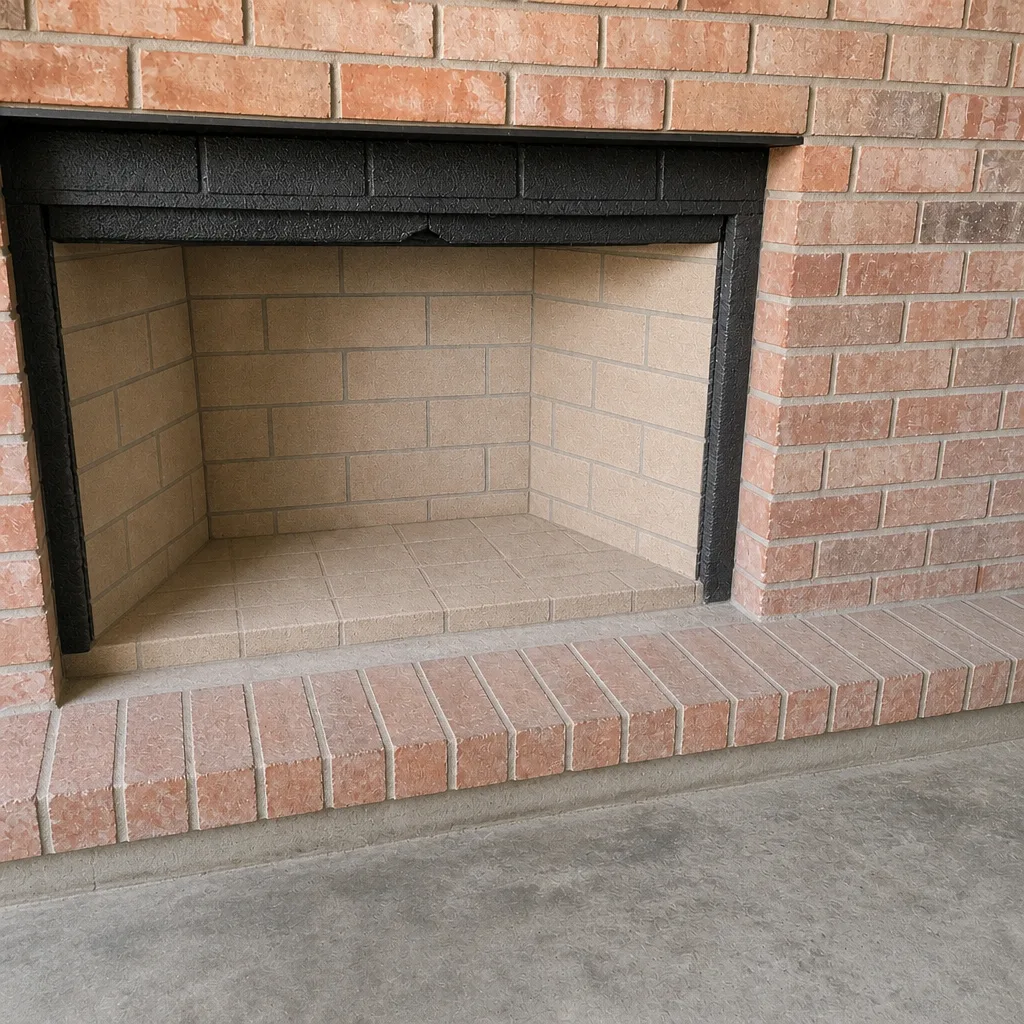
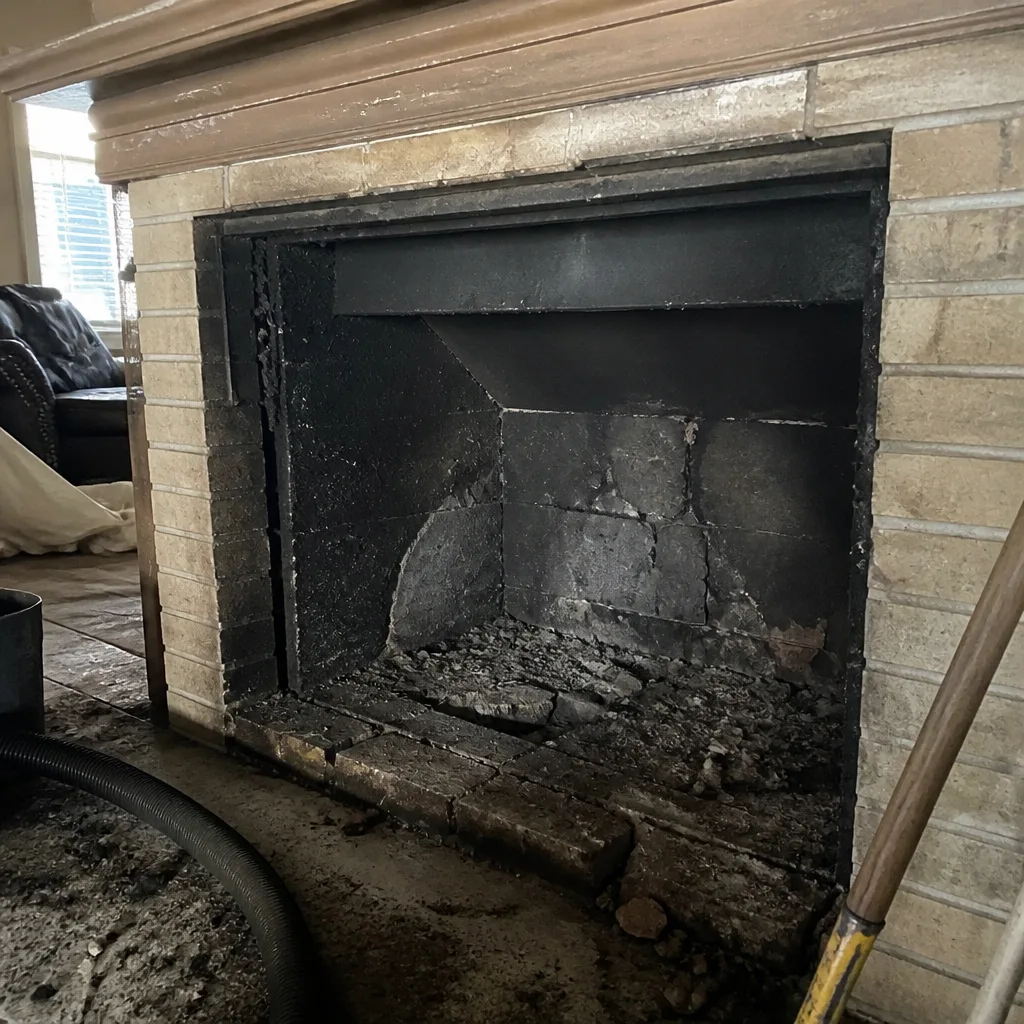
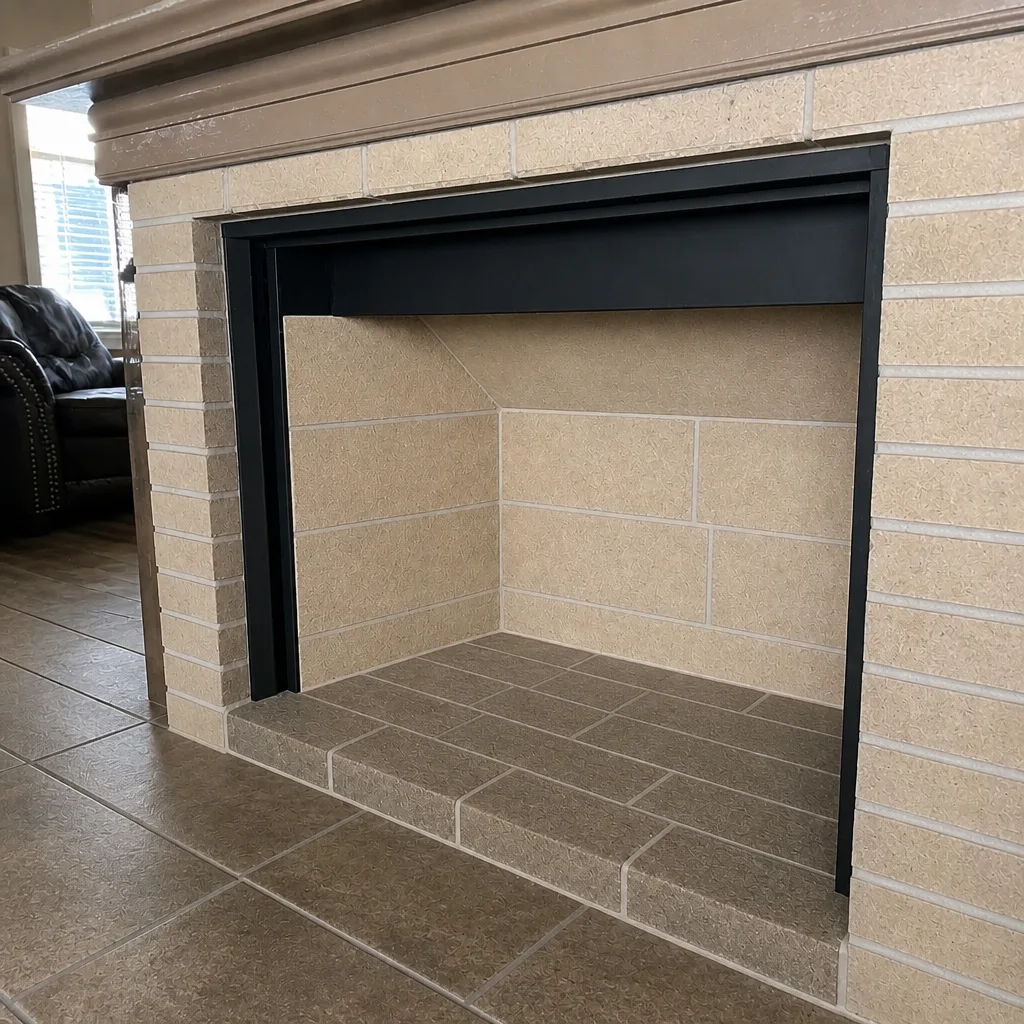
See the difference
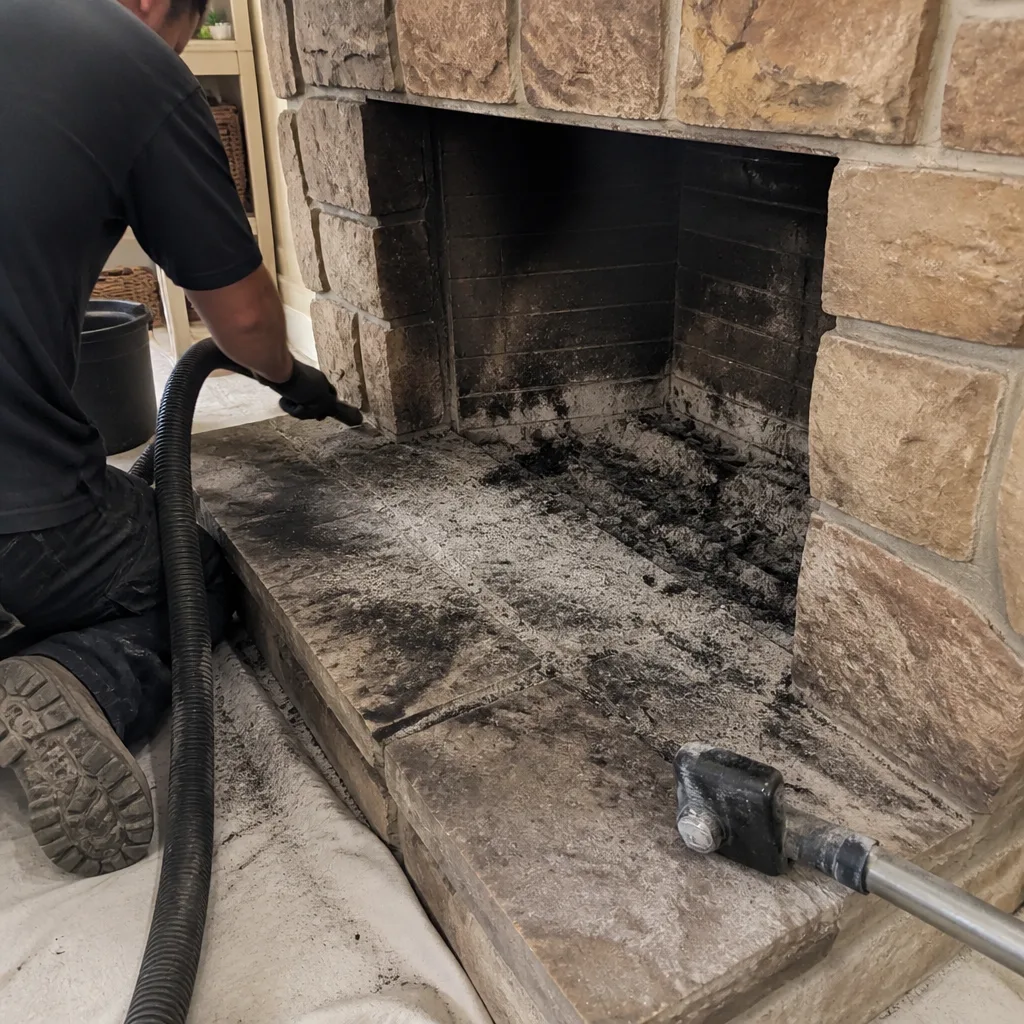 Before
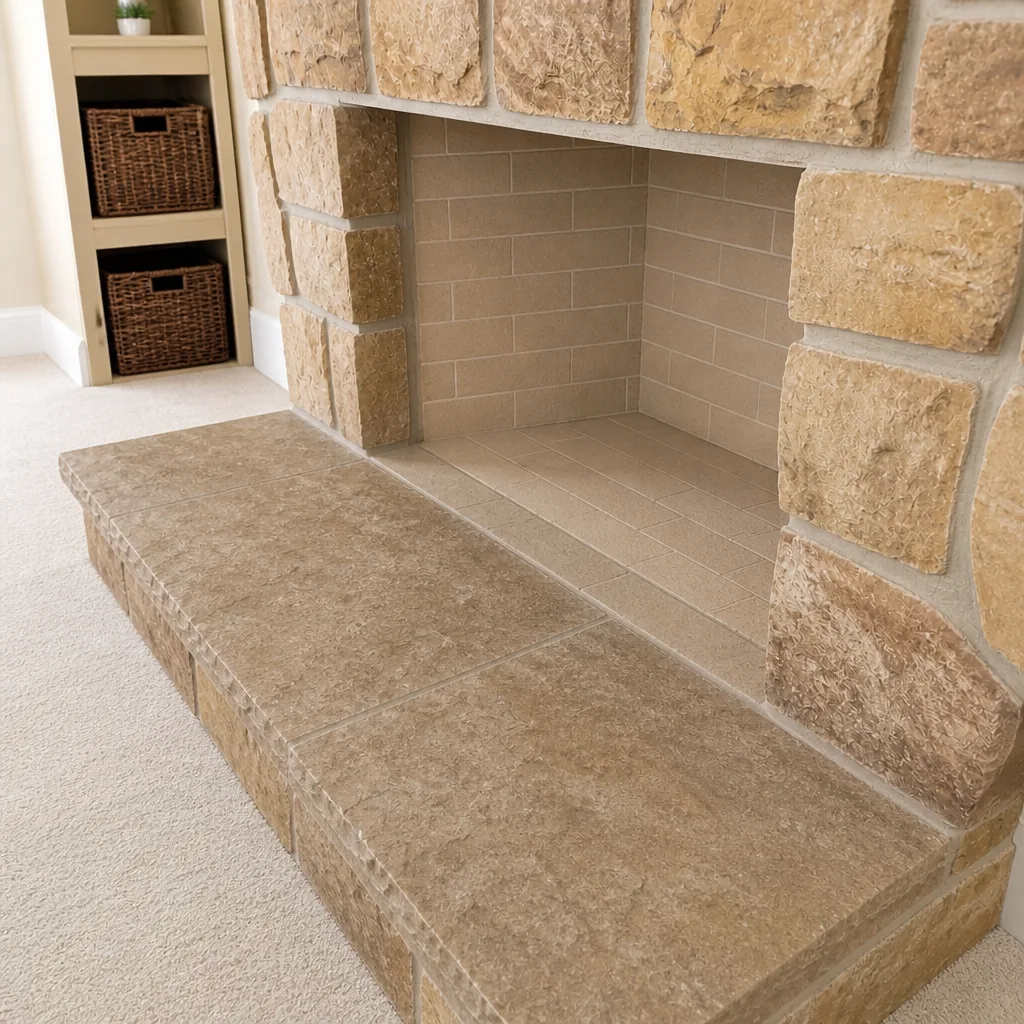 After
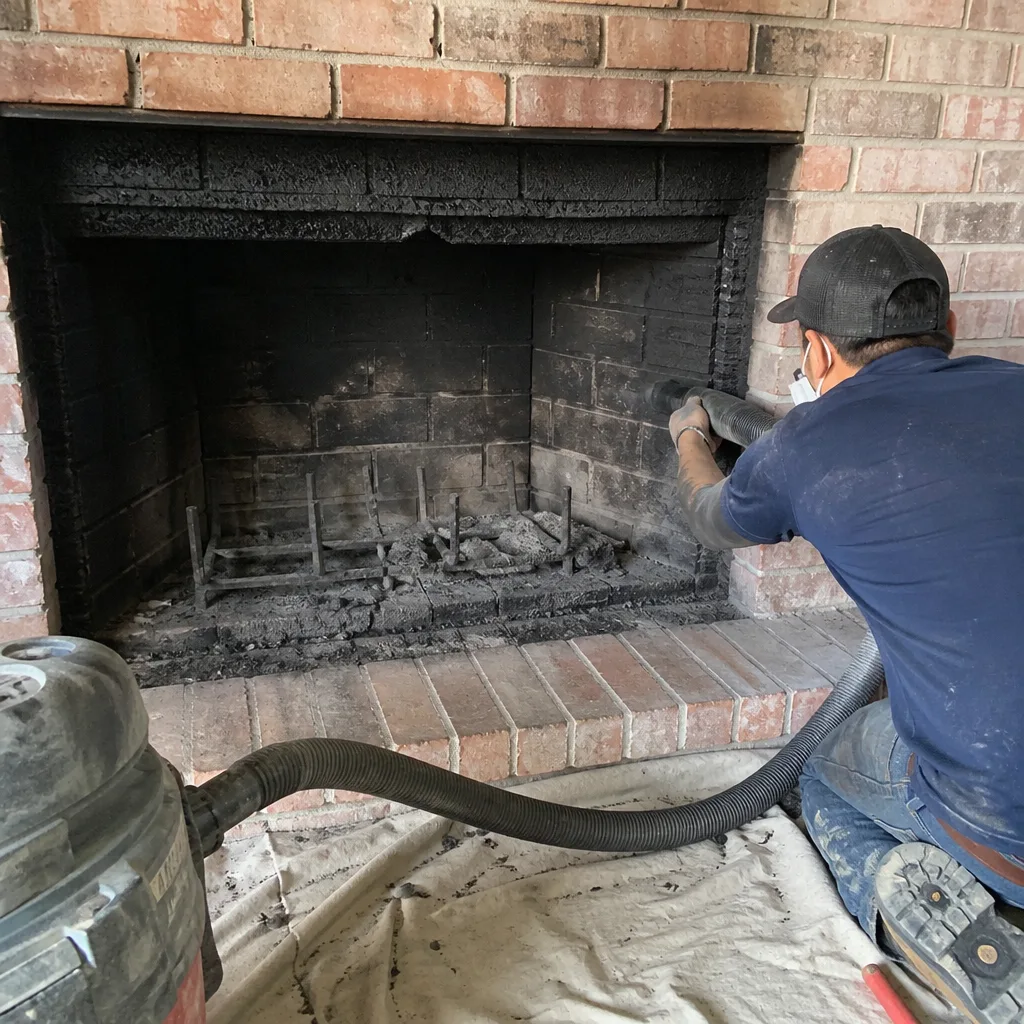 Before
 After
 Before
 After
When to Call a Professional
Call a professional when the symptom is outside what you can safely observe: smoke rollback that repeats, draft failure that isn’t a cold-flue startup, odor that returns after a sweep, visible flue cracking, or a damper or firebox defect you can’t fully assess. Also call before you list a home or right after you buy one, and whenever you can’t remember the last time the chimney was looked at. When the answer is unclear, a camera inspection settles it, and we’d rather tell you the chimney is fine than have you guess.
Pearland Chimney Cleaning offers free estimates in Pearland, call (866) 361-9474. We answer 24/7. Fast dispatch from 7am to 7pm, Sunday through Friday. One call covers sweep, inspection, and repair, so you’re not handed off between contractors when the inspection finds something.
Frequently Asked Questions
Once a year is the standard recommendation for most homes, and in Pearland’s humid climate that annual look also catches moisture damage, cap failures, and masonry spalling that a sweep alone wouldn’t flag. If you burn heavily in the cold months, an inspection partway through the season is worth considering. Call (866) 361-9474 for an exact quote, estimates are free.
A musty smell in an unused chimney usually means moisture is getting into the masonry or smoke chamber, often through a cracked cap or crown, and it’s common in Pearland’s humid air. It’s a different problem from the sharp creosote smell after a fire. A camera inspection finds the entry point. Call (866) 361-9474 to book an inspection, and you’ll see the footage yourself.
Not necessarily. A cold, damp flue often refuses to draw until it warms, so the first fire of the season can roll smoke for a few minutes and then settle. If it happens every fire, or every time an exhaust fan runs, that points to a real cause like an obstruction or pressure issue. Call (866) 361-9474 if it persists, estimates are free.
Soot and creosote keep building, and in a humid climate the creosote can harden into glaze that a brush won’t remove, which raises chimney fire risk. Moisture damage to masonry also gets worse with time, so a small cap repair becomes a larger one. Nothing about this is urgent-in-an-hour, but it does get more expensive to fix the longer it waits. Call (866) 361-9474 to get it on the calendar.
Many flues can be restored rather than fully replaced, and that’s a real cost difference. HeatShield liner restoration addresses glazed creosote and cracked surfaces, while a full reline with a DuraFlex or Olympia Chimney liner is for damage beyond what restoration can reach. The camera inspection decides which, and you should see the footage before approving either. Call (866) 361-9474 for an estimate.
You can safely check the firebox, damper, and smoke chamber from below with a flashlight, and the exterior stack with binoculars from the ground. What you shouldn’t do is climb the roof or reach into the flue to clear a blockage; that’s height work and a fall risk. Report what you see and let a professional handle the rest. Call (866) 361-9474 with your symptoms and we’ll quote the right service.
The Bottom Line
Most chimney trouble in Pearland comes down to two forces: humidity working on the masonry and a seasonal fireplace that sits idle for months between fires. Read your symptom correctly, with a flashlight where it’s safe and a camera where it isn’t, and you’ll avoid paying twice for the wrong fix. Glazed creosote needs restoration, spalling masonry needs repair, and a lot of “draft problems” are really moisture or a failed cap. Inspect first, then recommend, and the fix matches the finding. From the firebox to the crown, we identify it and we fix it, with one call covering sweep, inspection, and repair.
Call (866) 361-9474 for a free estimate. We answer 24/7. Fast dispatch from 7am to 7pm, Sunday through Friday.
Written by the team at Pearland Chimney Cleaning.